
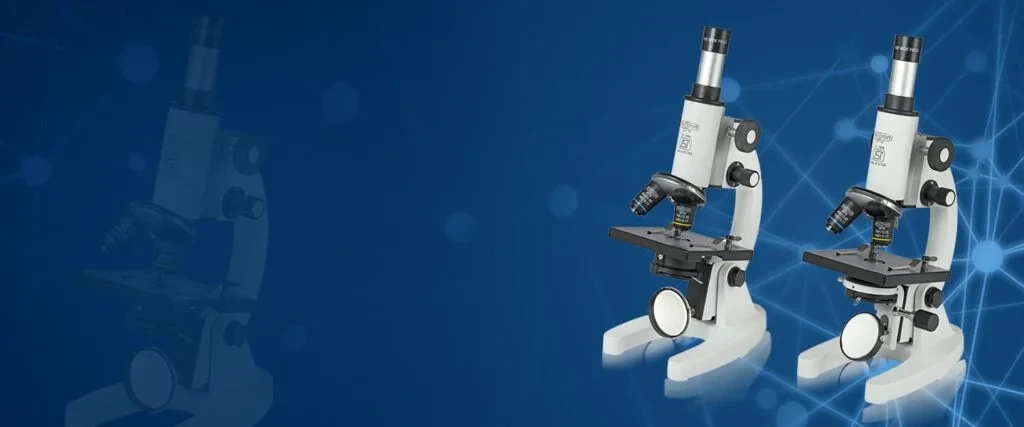
Your application purpose should work as the driving factor while choosing a microscope. What you will need to see under the microscope, and what you require to do with the image, determine which microscope you should go for. On contrary to what people generally believe, microscopes come in different versions and a single microscope cannot view everything.
Commonly known as the dissecting or stereoscopic microscope, this kind of microscope makes the light travel in two different paths to concentrate on the specimen. The image shown is in 3d. Stereo microscopes offer a high-depth perception, but they fall short in resolution and magnification. People generally use this for the purpose of dissecting and viewing insect specimens and fossils.
Digital microscopes cater to the purpose of capturing still images and video images. You can connect it to your computer monitor to have a better view. They make use of optics and charge-coupled devices (CCD). The imaging software helps in zooming, creating special effects, time-lapse videos, and editing. Digital microscopes come with an inbuilt led light source. Unlike a stereo microscope, you cannot directly view the sample through an eyepiece.
You must be wondering, “where can I buy a microscope?” go for brands that are trustworthy and authentic. There are a lot of cheap imported options made of plastic available in the market that can lure you to purchase them. But compromising on the quality would mean that you are getting an inferior structure that can break anytime and the optical quality will not be satisfying. You need to look for a sturdy metallic body that is durable.
Conventional microscopes have been using fluorescent, tungsten, or halogen bulb as a built-in source of light for a long time. The ones with fluorescent bulbs cost more than the tungsten ones. But people prefer fluorescent because of how bright they are and how they emit lesser heat when compared to halogen or tungsten bulbs.
However, as the microscopy industry kept improving, led illuminators replaced fluorescent bulbs. Both cost the same and have a similar coloring rendition problem, but led uses way lesser power and does not emit heat.
To answer the question, “where can I buy a microscope locally?”, check out your nearest brand store. It is very important to have a high-quality objective lens and eyepiece, as those are the principal elements of a microscope. If the microscope comes with an achromatic lens, consider it to be of standard quality. The refractive index of different colors is different, so the light gets refracted at various angles when made to pass through curved glass lenses. Achromatic lenses help correct the loss of light because of refraction.
It is advised that you buy microscopes that have din (Deutsch industry norm) objectives. The reason is that din objective is compatible with other din-compatible microscopes. In case your objective gets damaged, you can replace them easily with newer ones rather than purchasing a whole new microscope.
Coming to eyepieces, the wider they are, the clearer view you get. Ask the seller to show you only wide-field or super wide-field eyepieces. You will also notice that the lens width decreases with an increase in the size of magnification power.
A compound microscope should be complemented with a quality condenser and iris diaphragm in order to sell as a good one. Condensers are used to direct the light to the specimen. Abbe condenser is stated as the best because of the wide range of adjustment levels it provides.
Both are placed in the sub-stage of a microscope, working to adjust the base illumination.
You should be able to move the stage in order to focus. For the microscopes that are typically for high-power use, a fine adjustment system becomes necessary. The ease of use of the coarse adjustment knob is another thing to look out for. The knobs should not have any backlashes. For adjustments during observations, the knob must work in both directions and respond quickly.
While searching for your ideal microscope, always consider looking for brands instead of going for a medical instrument to save a few pennies. This is because you will end up using more money on replacements and upgrades. You should be well-informed about the purpose you will be using the microscope. This is a long-term investment that needs to be effective.