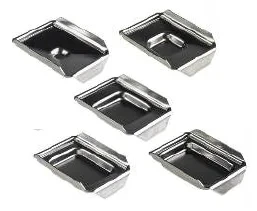
Tissue Embedding Cassettes
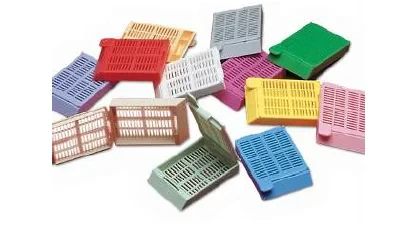
Detailed Specifications: The embedding cassettes are manufactured from high-quality acetal polymer (POM). The cassette dimensions are approximately 41mm x 28mm x 7mm. The cassette interior dimensions are approximately 30mm x 25mm x 5mm. The cassette features a secure snap-lid closure. The cassette design allows maximum reagent flow around the tissue. The writing surface is frosted for labeling with pencil, marker, or printed labels. The cassettes are resistant to xylene, alcohols, formalin, and molten paraffin. The cassettes withstand processing temperatures up to 70°C. The cassettes are available in white, blue, green, pink, yellow, and orange. The cassettes are disposable for single use. The cassettes are compatible with all standard tissue processors and embedding stations. The cassettes are packed in bags of 500 or 1000 pieces. The cassettes are manufactured under ISO quality standards.
Tissue Embedding Cassettes. The Tissue Embedding Cassettes from Micron are top rated disposable consumables for histopathology laboratories, designed to hold tissue specimens during processing and embedding. These cassettes are manufactured from high-quality, chemically resistant acetal polymer that withstands xylene, alcohols, formalin, and paraffin. The secure lid design keeps specimens contained throughout processing. The writing surface accepts standard laboratory markers for specimen identification. For histology laboratories seeking the best embedding cassettes for routine tissue processing, these cassettes are an outstanding choice that combines reliability with value.
One of the best features of these embedding cassettes is their chemical resistance and secure specimen retention. The acetal polymer construction resists degradation from all histology reagents including xylene, alcohols, formalin, and molten paraffin. The secure lid snaps closed firmly and stays closed during processing, preventing specimen loss. The cassette design allows maximum reagent flow around the tissue for optimal processing. The writing surface is frosted to accept pencil, permanent marker, or printed labels. The cassettes are available in white and multiple colors for case identification. The hinge design allows easy opening and closing without breakage. The cassettes are compatible with all standard tissue processors and embedding stations. Their chemical resistance, secure closure, and writing surface make them a top rated embedding cassette for routine histology.
High-Quality Acetal Polymer Construction: Chemically resistant material withstands xylene, alcohols, formalin, and molten paraffin.
Secure Snap-Lid Closure: Lid snaps closed firmly and stays closed during processing, preventing specimen loss.
Frosted Writing Surface: Accepts pencil, permanent marker, or printed labels for specimen identification.
Maximum Reagent Flow Design: Cassette design allows optimal reagent circulation around tissue for complete processing.
Multiple Color Options: Available in white, blue, green, pink, yellow, and orange for case identification.
Temperature Resistant: Withstands processing temperatures up to 70°C for paraffin infiltration.
Universal Compatibility: Compatible with all standard tissue processors and embedding stations.
ISO Quality Manufactured: Produced under international quality standards for consistent performance.
Routine Tissue Processing: Essential for holding tissue specimens during fixation, dehydration, clearing, and paraffin infiltration.
Biopsy Processing: Ideal for small biopsy specimens requiring careful handling.
Surgical Specimen Processing: Perfect for larger surgical specimens in routine histopathology.
Research Tissue Processing: Suitable for research specimens in academic and pharmaceutical laboratories.
Veterinary Pathology: Excellent for animal tissue processing.
Forensic Pathology: Ideal for post-mortem tissue processing in forensic investigations.