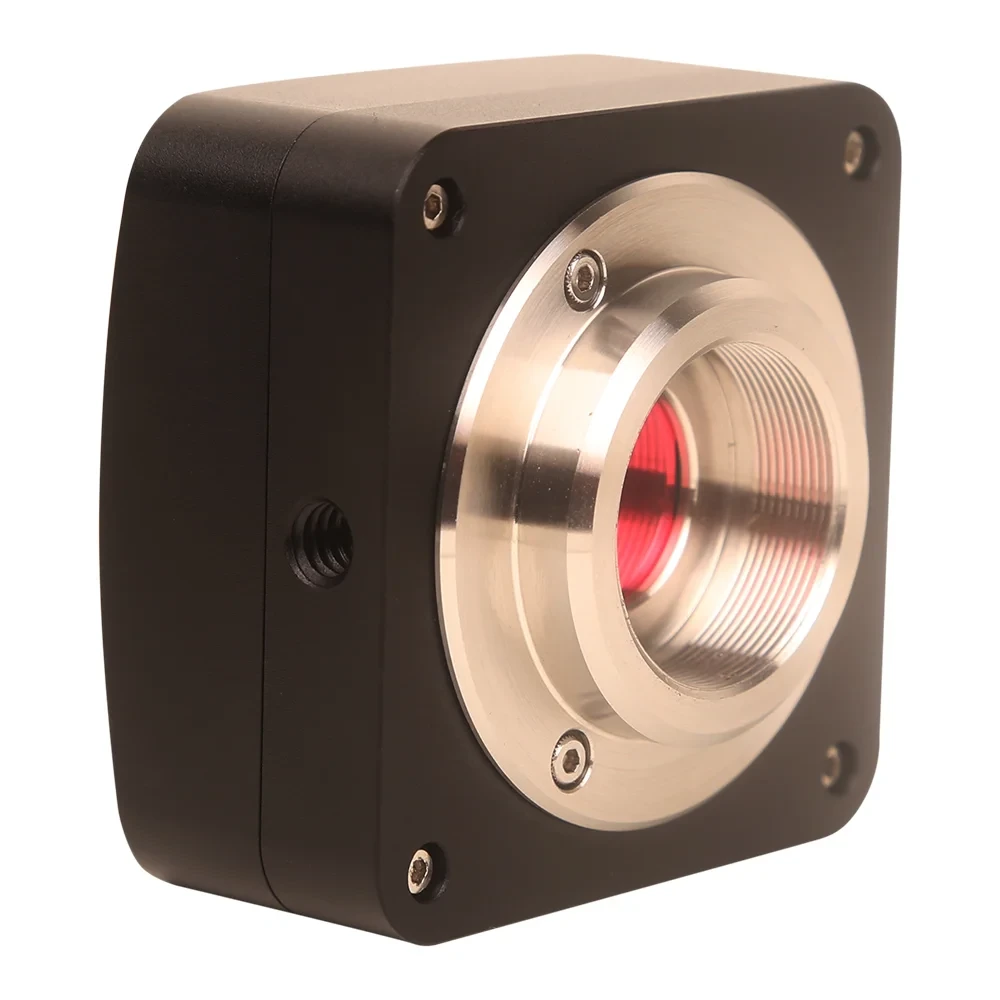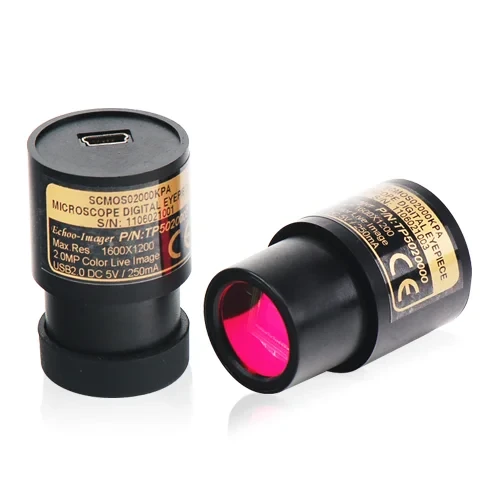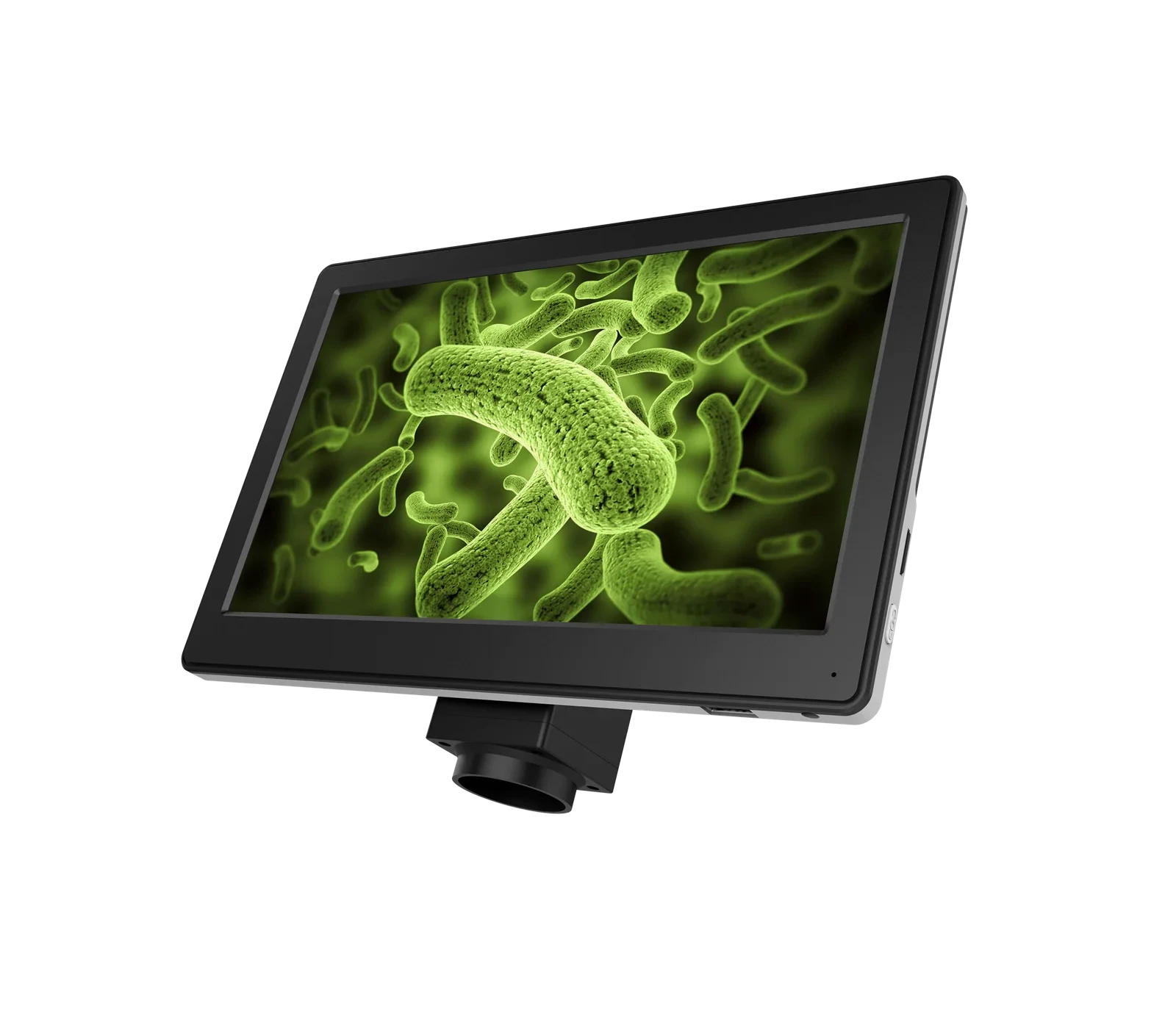
Cameras can be widely used to transfer with Trinocular Microscopes to a digital microscope.
Comes with Adopter with 23.2 diameter and compact size
High-quality camera with Aptina CMOS sensor
Auto white balance and auto-exposure; Brightness, contrast, chroma, and saturation can be adjusted
High-speed USB2.0 interface and high frame rate video display keep the screen smooth without interruption
Interfaced to a computer via USB2.0 technology for rapid image download.
Plug-to-use, suitable for shooting of any standard biological, stereo, and metallurgical microscopes.
Fully integrated package with a digital camera and imaging software for managing your imaging workflow.
Data can be shared, stored and edit, real-time preview function offers you the greatest experience with the microscope
Support still image capture(JPG, BMP)
Available in 2MP, 5MP, 10MP, 14MP, and many more options
Product Information A digital USB camera offers a high resolution view of the specimen under observation. The digital camera USB can easily be plugged in and attached with the microscope. The camera is equipped with an adapter and has a provision to balance brightness, contrast and saturation. The data can easily be stored, altered and shared. It also supports still image capture and is best paired with stereo and metallurgical microscopes. It is available in 2MP,5MP & various other options.
The Digital USB Camera from Micron is a top rated high-quality imaging accessory that converts any standard trinocular microscope into a digital imaging workstation.
Available in 2MP, 5MP, 10MP, 14MP, and higher options, these cameras provide high-resolution views of specimens for documentation, analysis, and sharing. The camera comes with a 23.2mm diameter adapter for easy attachment to trinocular microscope ports. The high-quality Aptina CMOS sensor delivers clear, detailed images with auto white balance and auto-exposure. For laboratories seeking the best digital camera for microscope documentation, Micron's USB camera series is an excellent choice.
One of the best features of this digital USB camera is its ease of use and comprehensive imaging software. The plug-to-use design allows simple installation without complex setup procedures. The high-speed USB 2.0 interface provides rapid image download and smooth, uninterrupted video display. The software allows adjustment of brightness, contrast, chroma, and saturation for optimal image quality. The camera supports still image capture in JPG and BMP formats, as well as video recording. The camera is compatible with any standard biological, stereo, or metallurgical microscope, making it a versatile upgrade for any laboratory. The real-time preview function provides the greatest experience with the microscope. Its ease of use, image quality, and software features make it a top rated digital USB camera for laboratory documentation.
High-Quality Aptina CMOS Sensor: Premium sensor technology delivers clear, detailed images with accurate color reproduction.
Multiple Resolution Options: Available in 2MP, 5MP, 10MP, 14MP, and higher for any documentation requirement.
23.2mm Adapter Included: Standard adapter fits most trinocular microscope ports for easy installation.
High-Speed USB 2.0 Interface: Fast data transfer and high frame rate video display without interruption.
Auto White Balance and Auto-Exposure: Automatic adjustments ensure optimal image quality without manual intervention.
Manual Image Adjustments: Brightness, contrast, chroma, and saturation can be manually adjusted for perfect images.
Still Image and Video Capture: Supports JPG and BMP image capture plus video recording for comprehensive documentation.
Universal Microscope Compatibility: Works with any standard biological, stereo, and metallurgical microscope.
Clinical Documentation: Essential for capturing diagnostic images for patient records and reports.
Research Documentation: Ideal for capturing research images for publications, presentations, and data analysis.
Quality Control Inspection: Perfect for documenting inspection results and defects in manufacturing.
Educational Teaching: Excellent for displaying microscope images on computers for student instruction.
Telepathology and Remote Consultation: Suitable for sharing images with remote colleagues for consultation.
Forensic Documentation: Ideal for capturing evidence images for forensic analysis and legal documentation.