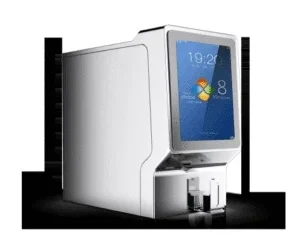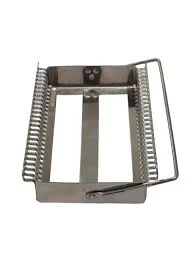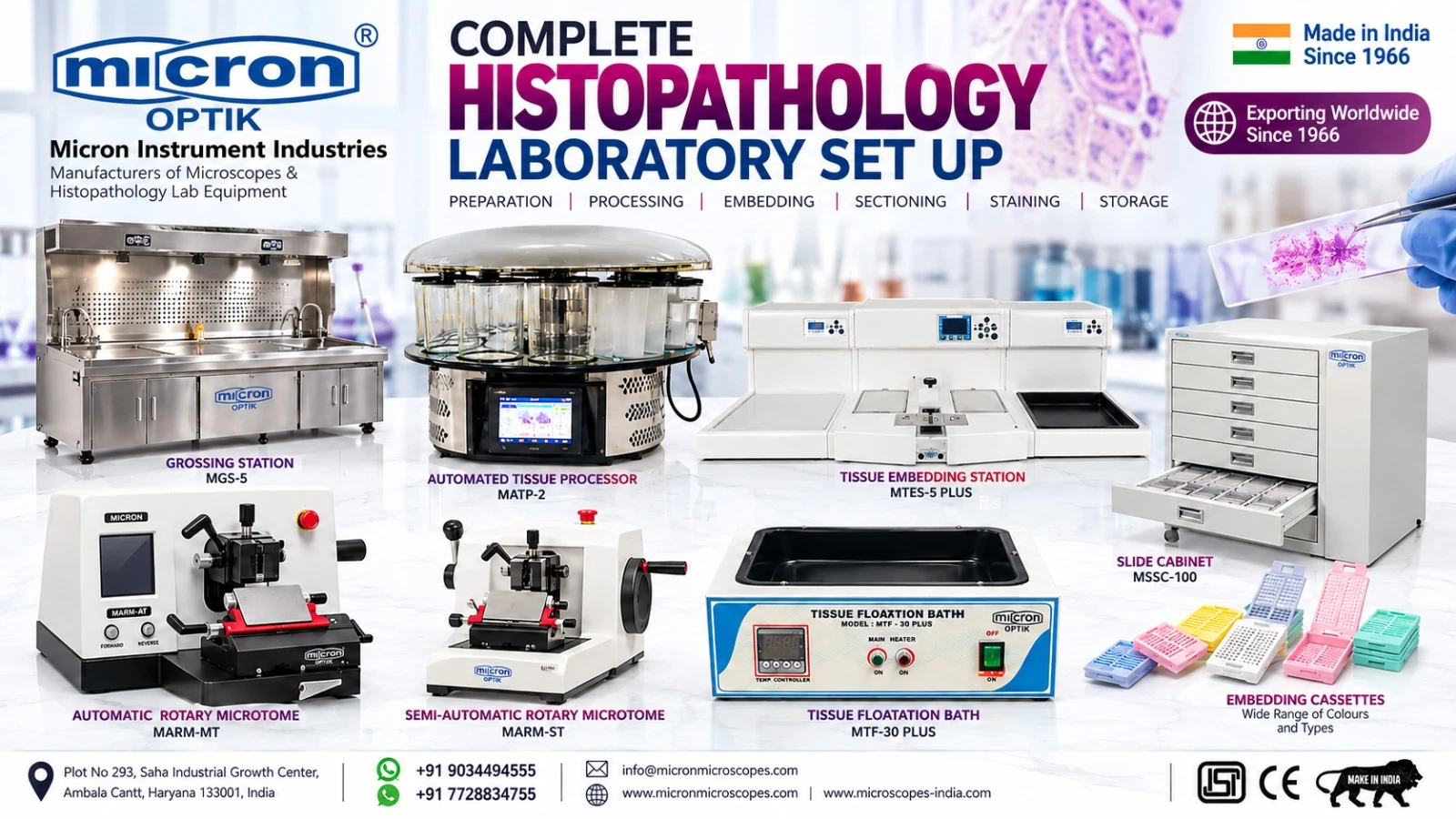
Thermal transfer printer for cassettes and slides
Print resolution: 300 dpi
Print speed: 6 slides/minute or 10 cassettes/minute
Accepts standard 75x25mm frosted-end slides
Accepts all standard embedding cassettes
Prints alphanumeric text, linear barcodes, and 2D Data Matrix codes
Connectivity: USB and Ethernet
LIS integration software included
Barcode scanner for verification (optional)
Chemical-resistant printing withstands xylene and alcohol
Additional Technical Details: The printer dimensions are 300mm x 250mm x 180mm. Weight is 5kg. The print head life is 50km of printing. The ribbon cartridge prints 500 slides or 1000 cassettes. The printer operates on 220V/50Hz power. The included software supports Windows operating systems. The printer can store up to 100 label templates. The LCD display is 3.5-inch color screen. The printer includes a slide feeder for batch printing. Warranty is 1 year on print head, 2 years on unit.
Cassette and slide printer from Micron is a dual-purpose thermal transfer printer designed to print directly onto embedding cassettes and glass slides. This instrument eliminates handwritten labels that can smudge or fall off during processing. This cassette and slide printer is widely considered the best solution for positive patient identification in histology laboratories.
The printer uses thermal transfer technology that fuses ink into the plastic or glass surface, producing text and barcodes that withstand xylene, alcohol, and formalin. It can print on standard frosted-end slides and all standard embedding cassettes. Micron's cassette and slide printer is a top rated instrument for laboratories seeking LIS integration and error reduction. The printer connects via USB or Ethernet for seamless data transfer.
The best cassette and slide printer from Micron features a 300 dpi print resolution for crisp, scannable barcodes. It prints up to 6 slides per minute or 10 cassettes per minute, keeping pace with accessioning. The user-friendly software allows batch printing and template design. For laboratories transitioning to lean workflows, this printer is one of the best investments for eliminating transcription errors. The compact design fits on any laboratory benchtop.
Micron's cassette and slide printer includes a barcode scanner for verification and software for LIS integration. The printer is backed by comprehensive warranty and technical support. Contact us to learn more about our cassette and slide printer and how it can improve your laboratory's patient safety. We offer demonstration units and trial periods.
Prints on Both Cassettes and Slides: Dual-purpose printer eliminates need for separate devices.
300 dpi Print Resolution: Crisp, scannable barcodes for automated tracking.
Chemical-Resistant Printing: Withstands xylene, alcohol, formalin, and paraffin.
6 Slides or 10 Cassettes Per Minute: Fast printing keeps pace with accessioning.
LIS Integration Software Included: Seamless data transfer from laboratory information system.
Prints Linear Barcodes and 2D Codes: Supports Data Matrix for high-density information.
Batch Printing Capability: Queue hundreds of print jobs for efficient workflow.
Compact Benchtop Design: Fits easily on grossing or embedding workstations.
Histopathology Accessioning: Essential for printing patient identification on cassettes during specimen intake.
Slide Labeling: Ideal for printing identification on glass slides during microtomy.
Biopsy Processing Centers: Perfect for high-volume specimen identification and tracking.
Research Specimen Labeling: Suitable for printing identification on research cassettes and slides.
Veterinary Diagnostic Laboratories: Excellent for animal specimen identification.
Commercial Reference Laboratories: Ideal for high-throughput printing with LIS integration.