304-grade stainless steel construction throughout
Dimensions: 2600mm x 800mm x 900mm (LxWxH)
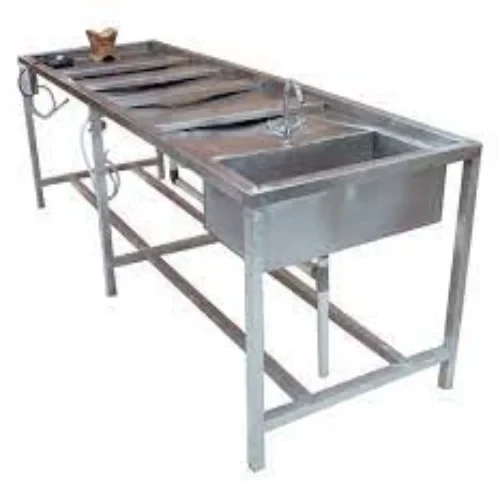
Pedestal-type table with raised perimeter to contain fluids
Dissecting area with removable grid plates
Integrated sink with vacuum breaker for proper drainage
Gooseneck faucet with rinse hose and hose hanger
Polyurethane/wooden head rest for neck support
Built-in stainless steel centimeter scale
Scale support socket and bar for weighing scale
Polyurethane dissecting board (2 x 1.5 x 0.75 inches)
2 electrical switches and sockets (15/5 amp) fitted on side
Additional Technical Details: The table top thickness is 2mm 304-grade stainless steel. The removable grid plates have 10mm spacing for fluid drainage. The sink measures 400mm x 300mm x 200mm. The vacuum breaker is brass construction with anti-siphon function. The gooseneck faucet rotates 360 degrees. The rinse hose is 1.5 meters long with spray nozzle. The hydraulic height control option provides 200mm adjustment range. The table weight is 150kg. Power input is 220-240V, 50Hz with Indian plug.
Autopsy table from Micron is a heavy-duty stainless steel workstation designed for post-mortem examinations in forensic pathology and hospital morgues. These tables feature a dissecting surface with integrated sink, removable grid plates, and efficient drainage systems. This autopsy table is widely considered the best solution for medicolegal death investigation facilities.
The table is constructed from 304-grade stainless steel throughout, providing exceptional corrosion resistance and ease of sanitation. The raised perimeter contains fluids on the work surface, while the integrated sink allows for thorough cleaning between cases. Micron's autopsy table is a top rated instrument for forensic pathology departments requiring durable, hygienic workstations. The removable grid plates provide a stable cutting surface while allowing fluids to drain freely.
The best autopsy table from Micron features a hydraulic height adjustment system. This allows pathologists to position the table at an ergonomic height, reducing back strain during lengthy examinations. The gooseneck faucet with rinse hose provides convenient cleaning of the table and specimens. For facilities conducting multiple autopsies daily, this ergonomic design is essential for staff health. The table includes a built-in centimeter scale for measuring wounds and organs.
Micron has designed this autopsy table with practical features for efficient workflow. The scale support bar holds weighing scales for organ measurement, and the polyurethane headrest supports the neck during dissection. This is one of the best investments for mortuary facilities seeking to improve examination efficiency and staff comfort. The table is available with optional downdraft ventilation to control odors.
304-Grade Stainless Steel Construction: Heavy-duty corrosion-resistant material withstands harsh disinfectants and daily use.
Removable Grid Plates: Provide stable cutting surface while allowing fluids to drain freely into the sink.
Integrated Sink with Vacuum Breaker: Ensures proper drainage and prevents backflow contamination.
Gooseneck Faucet with Rinse Hose: 360-degree rotating faucet with 1.5-meter spray hose for thorough cleaning.
Hydraulic Height Adjustment Option: Allows ergonomic positioning to reduce pathologist back strain during lengthy examinations.
Built-in Centimeter Scale: Engraved scale for accurate measurement of wounds, organs, and specimens.
Polyurethane Head Rest: Supports the neck during dissection for improved ergonomics.
Scale Support Bar: Holds dial-type weighing scale for convenient organ weight measurement.
Forensic Pathology Facilities: Essential for medicolegal death investigations in medical examiner offices.
Hospital Morgues: Ideal for hospital-based autopsy services and pathology departments.
Medical School Anatomy Departments: Perfect for teaching dissection and anatomy education.
Research Mortuary Facilities: Suitable for post-mortem research in academic institutions.
Disaster Victim Identification Centers: Essential for victim examination in mass casualty incidents.
Veterinary Post-Mortem Facilities: Ideal for animal necropsy in veterinary diagnostic laboratories.