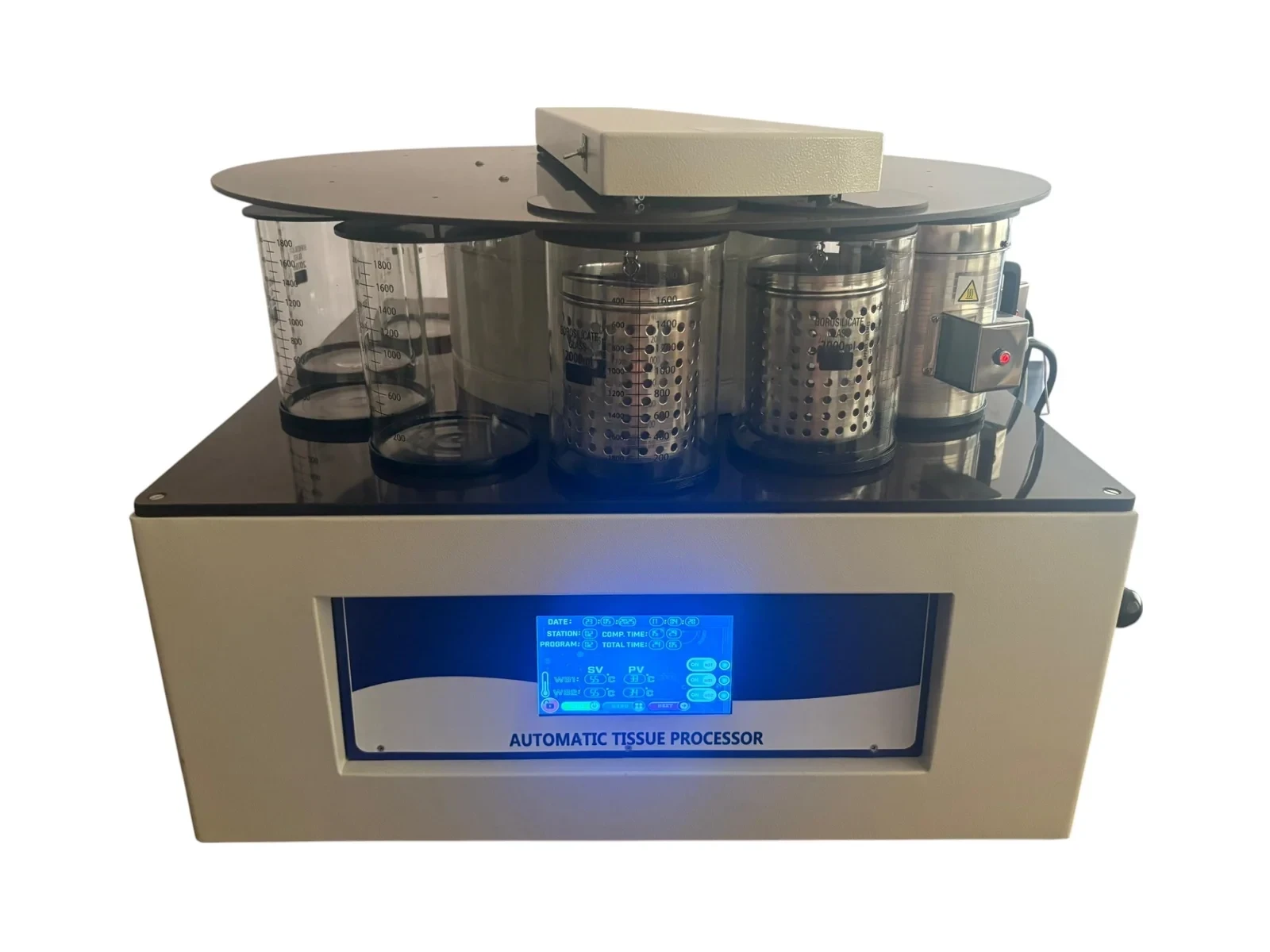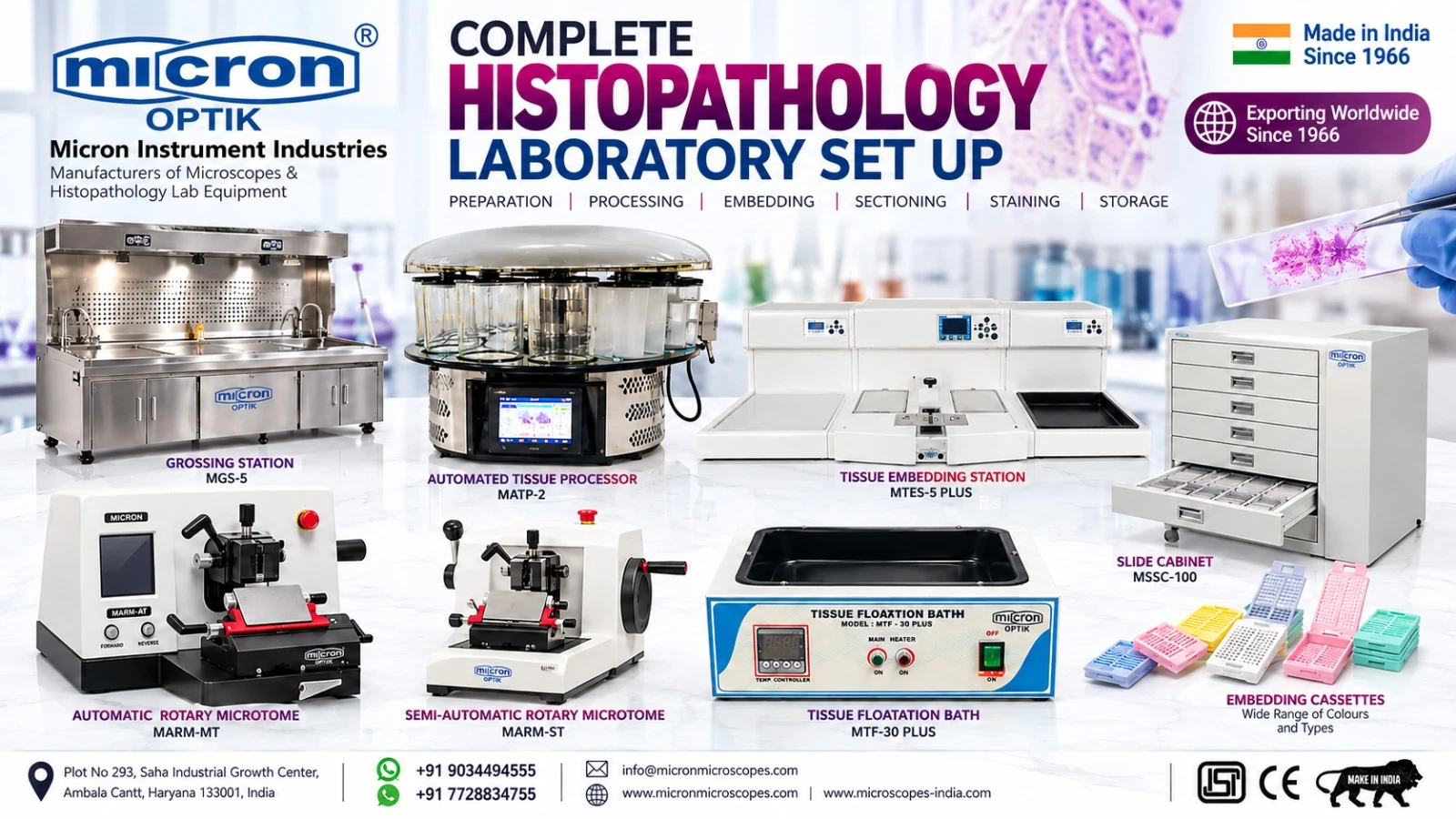
Fully automatic carousel-type histology processor
12 processing stations with 10 reagent and 2 paraffin positions
Capacity: 100 cassettes (single basket) or 200 cassettes (double basket)
Reagent temperature range: 30°C to 65°C
Paraffin temperature range: 50°C to 70°C in 1°C increments
Programmable immersion time: 1 minute to 99 hours 59 minutes
Memory: Stores up to 15 user-defined processing protocols
Agitation: Programmable frequency (4-8 times per hour)
Vacuum and pressure modes for accelerated processing
Charcoal filtration system with filter life indicator
Automatic histology processor from Micron is a specialized instrument designed to automate the critical tissue preparation steps required for diagnostic histopathology. This system manages fixation, dehydration, clearing, and paraffin infiltration according to programmable protocols. This automatic histology processor is widely recognized as the best solution for laboratories seeking consistent, high-quality processing results.
The instrument features a user-friendly interface that allows technicians to program complex processing schedules including delayed starts and weekend delays. Each reagent station's immersion time and temperature can be independently adjusted. Micron's automatic histology processor is a top rated instrument for eliminating the variability associated with manual processing methods. The sealed reagent system with charcoal filtration protects staff from exposure to volatile organic compounds.
The best automatic histology processor from Micron incorporates programmable agitation and vacuum cycles. These features ensure thorough reagent exchange and enhanced penetration into dense or fatty tissues. The large color touch screen provides real-time cycle status, time remaining, and alarm notifications. For laboratories requiring documentation, this processor maintains detailed cycle logs for quality assurance and regulatory compliance. The robust construction ensures years of reliable service with minimal maintenance requirements.
Micron has designed this automatic histology processor with energy-efficient components that reduce operating costs while maintaining precise temperature control. The battery backup system protects ongoing cycles during power interruptions. This is one of the best investments for histology laboratories looking to improve throughput and consistency. The audible and visual alarms provide immediate notification of cycle completion or any operational issues requiring attention.
12-Station Automatic Processing: Automates fixation, dehydration, clearing, and paraffin infiltration for consistent results.
100-200 Cassette Capacity: Handles routine workloads efficiently with double basket option for peak periods.
Programmable Vacuum and Agitation: Ensures thorough reagent exchange and enhanced penetration for dense tissues.
15 Program Memory Storage: Stores multiple protocols for different tissue types and processing requirements.
Charcoal Fume Filtration: Protects laboratory personnel from exposure to hazardous organic vapors.
Battery Backup Protection: Safeguards ongoing cycles and program data during power interruptions.
Real-Time Cycle Monitoring: Color touch screen displays cycle status, time remaining, and alarm notifications.
PID Paraffin Temperature Control: Maintains precise temperature within +/-0.3°C for optimal infiltration.
Clinical Histopathology Laboratories: Essential for routine tissue processing in hospital pathology departments.
Reference and Commercial Labs: Ideal for high-volume laboratories processing specimens from multiple facilities.
Pharmaceutical Research: Suitable for preclinical studies requiring consistent processing protocols.
Veterinary Diagnostic Labs: Perfect for animal tissue processing in veterinary pathology.
Academic Medical Centers: Excellent for teaching hospitals with diverse specimen types.
Forensic Pathology Facilities: Ideal for post-mortem tissue processing requiring reliable automation.