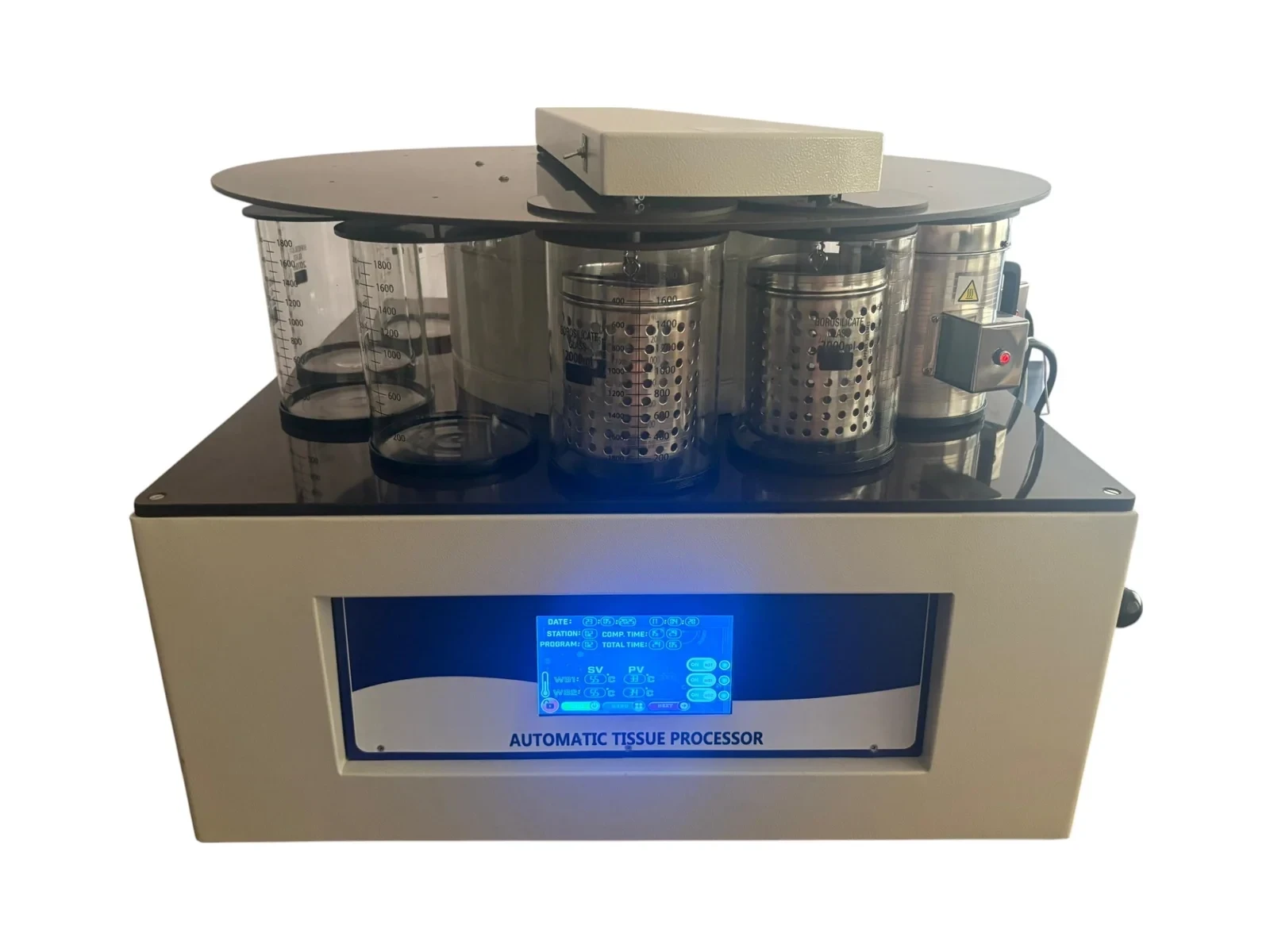
Benchtop carousel-type automated tissue processor
12 to 14 processing stations depending on configuration
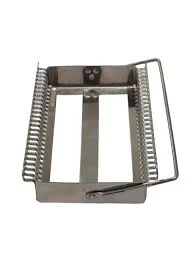
Capacity: 100 cassettes (standard) or 200 cassettes (double basket)
Reagent temperature range: Ambient to 65°C
Paraffin temperature range: 50°C to 70°C with 1°C increments
Programmable immersion time: 1 minute to 99 hours 59 minutes
Memory storage: 10 to 15 user-defined programs
Agitation: Programmable frequency and duration
Vacuum and pressure modes for accelerated processing
Charcoal filtration system for fume containment
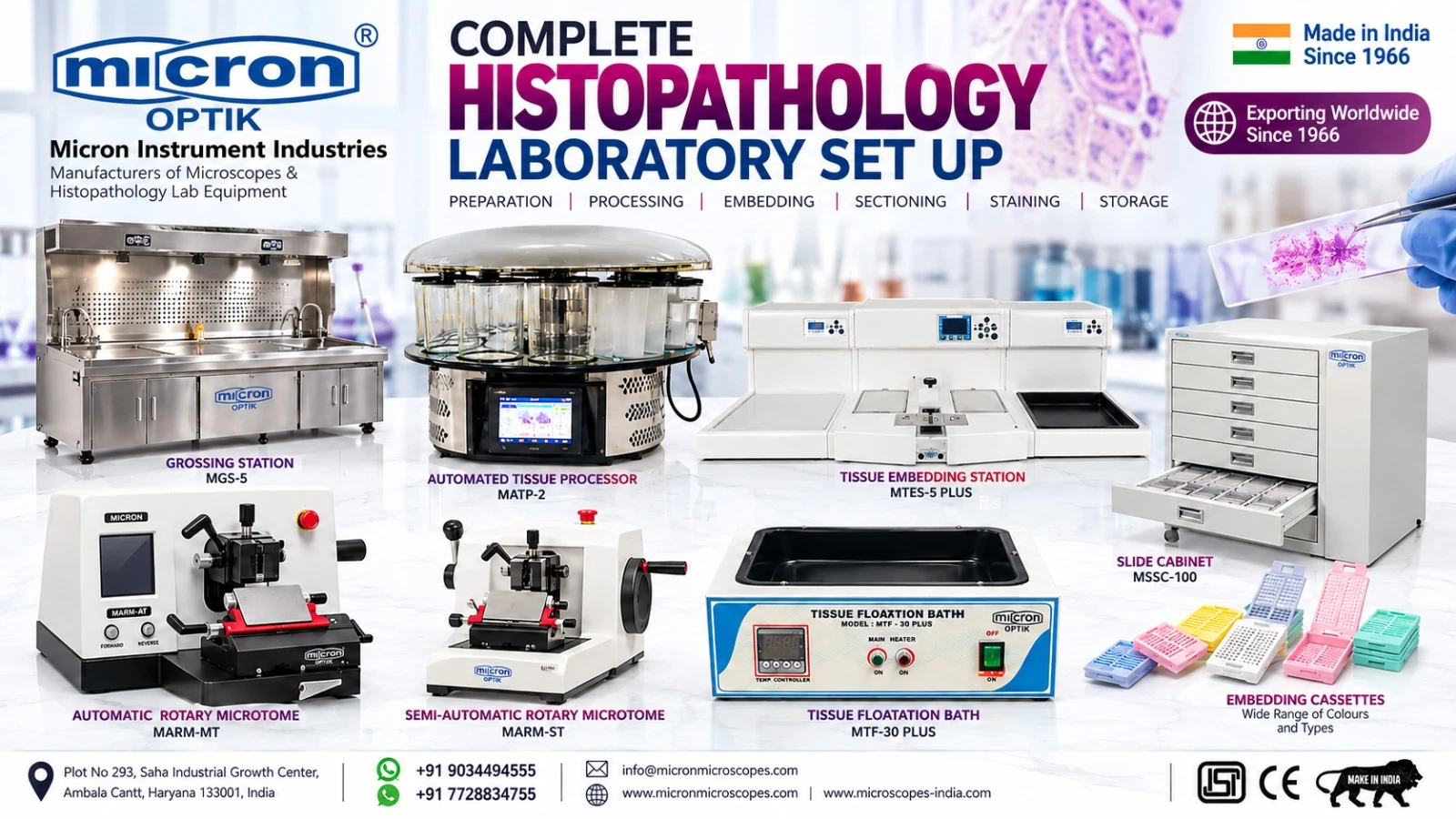
Automated tissue processor from Micron is a precision instrument designed to automate the critical steps of tissue preparation for histological examination. This system handles fixation, dehydration, clearing, and paraffin infiltration with minimal operator intervention. This automated tissue processor is widely considered the best choice for laboratories seeking to standardize their histology workflows.
The instrument features a carousel or linear design that moves tissue baskets through a series of reagent stations according to user-programmed schedules. Each station's immersion time, temperature, and agitation settings are independently adjustable. Micron's automated tissue processor is a top rated solution for eliminating the variability associated with manual processing methods. The sealed reagent vessels with charcoal filters minimize fume exposure, creating a safer laboratory environment.
The best automated tissue processor from Micron includes programmable vacuum and pressure cycles. These cycles enhance reagent penetration into dense tissues, ensuring complete processing for challenging specimens like fatty breast or fibrous tumors. The intuitive touch screen interface allows technicians to create and store multiple processing protocols for different tissue types. For laboratories requiring traceability, this processor maintains detailed cycle logs for quality assurance purposes. The compact design fits on standard laboratory benchtops.
Micron has engineered this automated tissue processor with robust components that provide years of reliable service with minimal maintenance. The battery backup system protects ongoing cycles during power interruptions, preventing loss of valuable specimens. This is one of the best investments for laboratories looking to improve throughput while maintaining consistent processing quality. The audible and visual alarms provide immediate notification of cycle completion or any operational issues.
12-Station Carousel Processing: Provides flexible configuration with 10 reagent and 2 paraffin stations for complete tissue preparation.
100-200 Cassette Capacity: Handles routine workloads efficiently while offering double basket option for high-volume days.
Programmable Vacuum and Pressure: Accelerates reagent penetration for complete processing of dense and challenging tissues.
Charcoal Fume Filtration: Protects laboratory personnel from exposure to hazardous xylene and formalin vapors.
10-15 Program Memory: Stores multiple protocols for different tissue types and processing requirements.
Battery Backup Protection: Safeguards ongoing cycles and program data during power interruptions.
PID Temperature Control: Maintains precise paraffin temperature within +/-0.3°C for optimal infiltration.
Compact Benchtop Design: Fits easily into existing laboratory layouts without requiring major renovations.
Routine Histopathology Laboratories: Essential for daily tissue processing in hospital pathology departments.
Biopsy Processing Centers: Ideal for small specimen processing requiring consistent, high-quality results.
Research Pathology Facilities: Suitable for processing research specimens in academic and pharmaceutical settings.
Veterinary Diagnostic Laboratories: Perfect for animal tissue processing in veterinary pathology.
Small to Medium Clinical Labs: Excellent for community hospitals and diagnostic centers with moderate volumes.
Teaching Institutions: Ideal for histotechnology training programs demonstrating automated processing techniques.