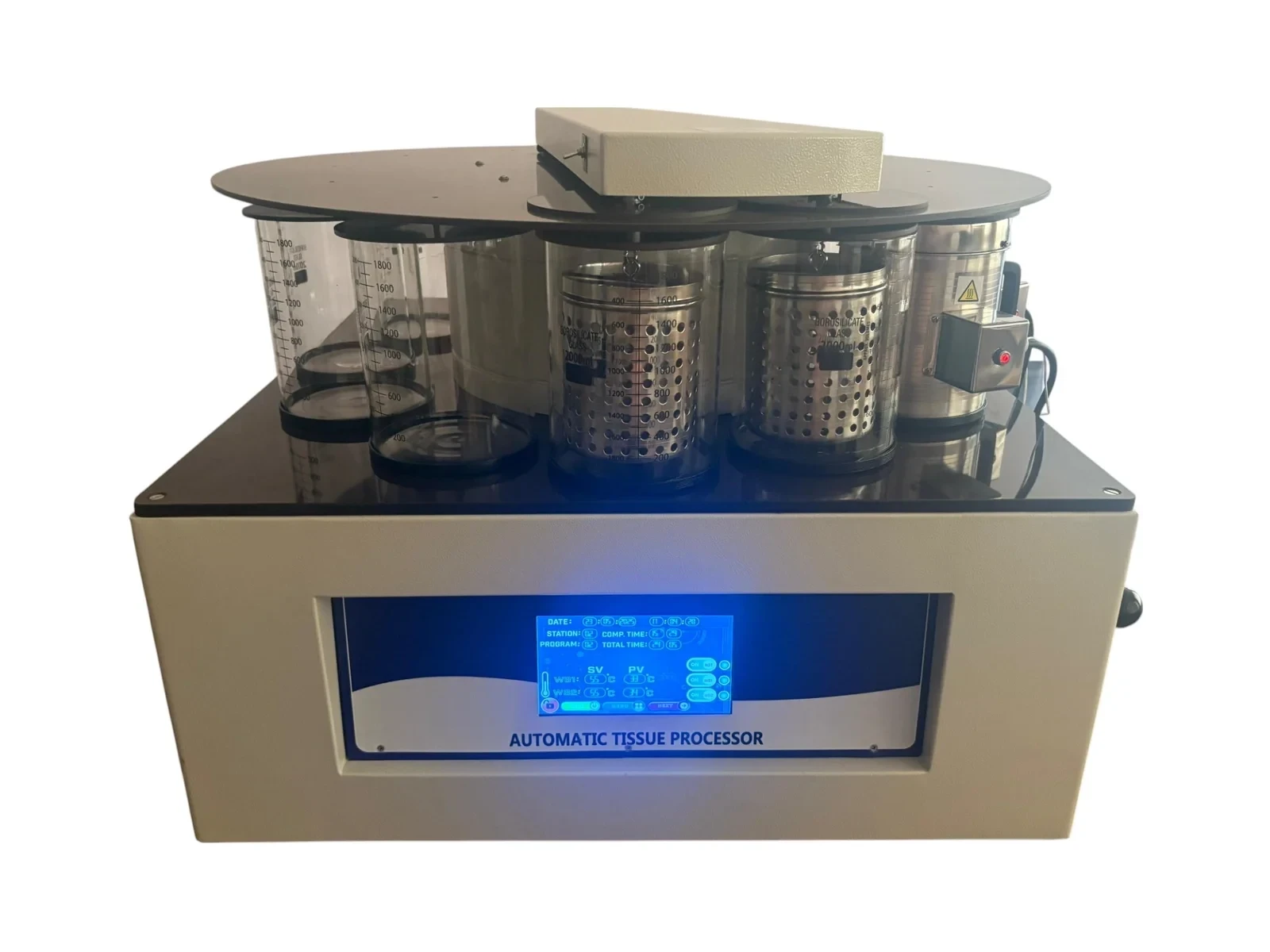
Fully automated carousel or linear tissue processing system
Processing capacity: 100 to 300 cassettes per run depending on model
Reagent stations: 10 to 14 programmable stations
Paraffin stations: 3 to 4 heated wax baths
Temperature range: Ambient to 70°C for wax, 30-65°C for reagents
Programmable agitation: Adjustable frequency and duration
Vacuum and pressure modes for accelerated processing
Reagent management system with usage tracking and alerts
Charcoal filtration for fume containment
Battery backup for cycle protection during power failures
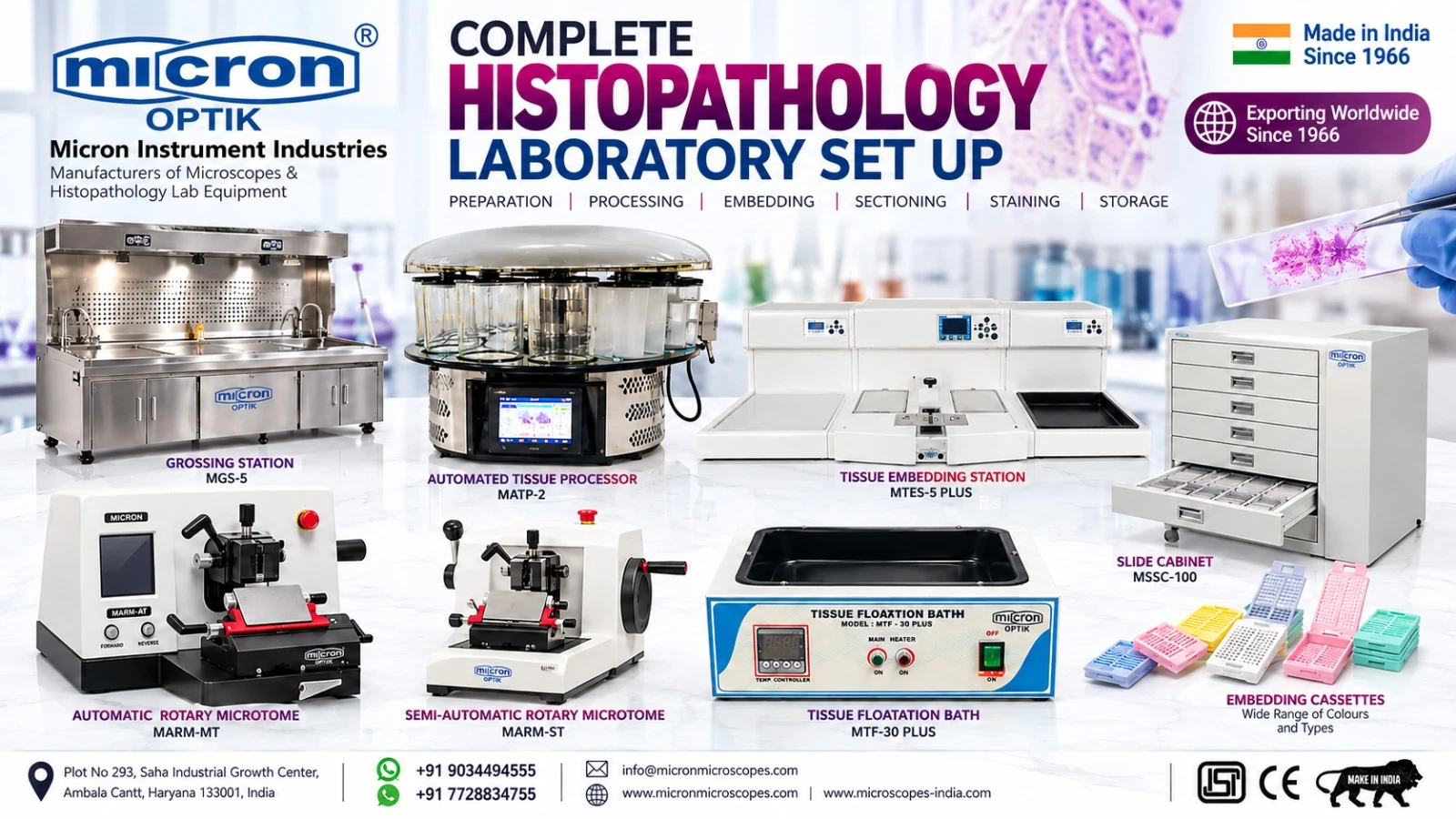
Automated tissue processing machine from Micron revolutionizes histology workflows by completely automating the multi-step process of tissue preparation for microscopic examination. This advanced instrument handles fixation, dehydration, clearing, and paraffin infiltration without manual intervention. This automated tissue processing machine is widely recognized as the best solution for laboratories seeking to standardize their processing protocols.
The machine features a sealed processing chamber that prevents reagent evaporation and cross-contamination while maintaining optimal temperatures for each processing stage. Technicians can load specimens and walk away, allowing the automated tissue processing machine to operate overnight or over weekends. Micron's automated system is a top rated choice for high-volume histology labs requiring consistent, artifact-free tissue preparation. The programmable agitation ensures thorough reagent exchange, critical for complete processing of dense specimens.
The best automated tissue processing machine from Micron incorporates advanced safety features including over-temperature protection and automatic shutdown. The intelligent reagent management system tracks usage and alerts staff when solutions need replacement. The touch screen interface provides real-time status updates, cycle time remaining, and alarm notifications. For laboratories transitioning to lean workflows, this automation eliminates processing variability between different technicians. The compact footprint fits into existing laboratory layouts without requiring major renovations.
Micron has designed this automated tissue processing machine with energy-efficient components that reduce operating costs while maintaining precise temperature control. The self-diagnostic system continuously monitors all critical functions and alerts operators to potential issues before they affect specimen quality. This is one of the best investments for laboratories seeking to improve turnaround time and reduce repetitive strain injuries. The sealed reagent bottles with charcoal filters minimize staff exposure to volatile organic compounds.
Fully Automated Processing Cycles: Eliminates manual intervention, ensuring consistent results and freeing technicians for other tasks.
100-300 Cassette Capacity Options: Scalable models to suit any laboratory volume from small clinics to large reference labs.
Programmable Vacuum and Pressure: Accelerates reagent penetration for complete processing of dense and fatty tissues.
Intelligent Reagent Management: Tracks solution usage and alerts staff when reagents need replacement.
Sealed Processing Chamber: Prevents reagent evaporation and cross-contamination while containing hazardous fumes.
Overnight and Weekend Processing: Program delayed starts for unattended operation, maximizing equipment utilization.
Self-Diagnostic Monitoring System: Continuously checks critical functions and alerts operators to potential issues.
Energy-Efficient Operation: Reduces power consumption while maintaining precise temperature control.
High-Volume Histopathology Laboratories: Essential for hospital pathology departments processing hundreds of specimens daily.
Commercial Reference Laboratories: Ideal for labs requiring standardized processing for specimens from multiple facilities.
Pharmaceutical Research Facilities: Suitable for preclinical studies requiring consistent tissue processing protocols.
Academic Medical Centers: Perfect for teaching hospitals with diverse specimen types and high volumes.
Veterinary Diagnostic Laboratories: Excellent for animal tissue processing in veterinary pathology.
Forensic Pathology Facilities: Ideal for post-mortem tissue processing requiring reliable automation.