 BIOLOGICAL MICROSCOPES
 Histopathology & Clean Room Equipments
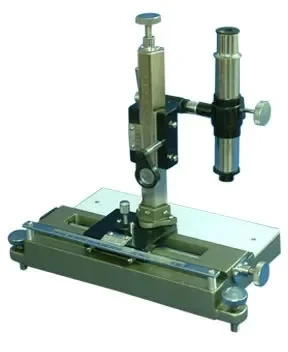
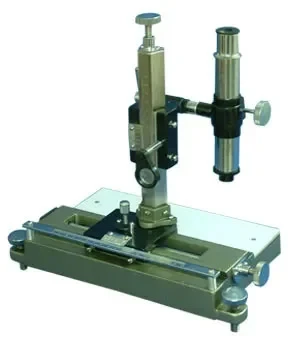
A Travelling Microscope is a precision instrument used to measure the distance between two points with high accuracy, typically used in physics laboratories to determine refractive indices or measure small lengths. Micron's travelling microscope combines a standard microscope with a precise mechanical slide mechanism. It is widely considered the best instrument for teaching optical physics principles in universities.
The device consists of a microscope mounted on a carriage that travels along a graduated horizontal scale (typically 15-20 cm) using a precision screw or rack and pinion system. A vernier scale allows readings down to 0.01mm or 0.001cm. Rated as top rated equipment for engineering physics labs, it provides consistent, repeatable measurements. The vertical column also allows for vertical travel, enabling measurement of depth or height differences.
Micron's travelling microscope features a high-quality optical system with a clear crosshair reticle in the eyepiece. The user aligns the crosshair with the edge of a meniscus or the line of a scale, takes a reading, moves the microscope, and aligns with the next point. For determining the refractive index of liquids using a capillary tube, this alignment precision is the best feature. The rack and pinion focusing mechanism allows for sharp focusing on the specimen or scale surface.
These microscopes are essential for experiments like determining the wavelength of light using Newton's rings or measuring the focal length of lenses. The sturdy cast-iron base ensures stability during measurement, while the included wooden storage box allows for safe portability between labs. That is why Micron is a top rated provider for college physics departments and optical workshops. The instrument requires no external power, relying on a mirror to direct ambient light onto the specimen.
Investing in a Micron Travelling Microscope enhances the quantitative capabilities of any physics laboratory. It is the best choice for experiments requiring precise, low-friction linear measurement. By teaching students how to read vernier scales and avoid parallax error, it builds essential metrology skills for future engineers and scientists.

 SURGICAL MICROSCOPES