 BIOLOGICAL MICROSCOPES
 Histopathology & Clean Room Equipments
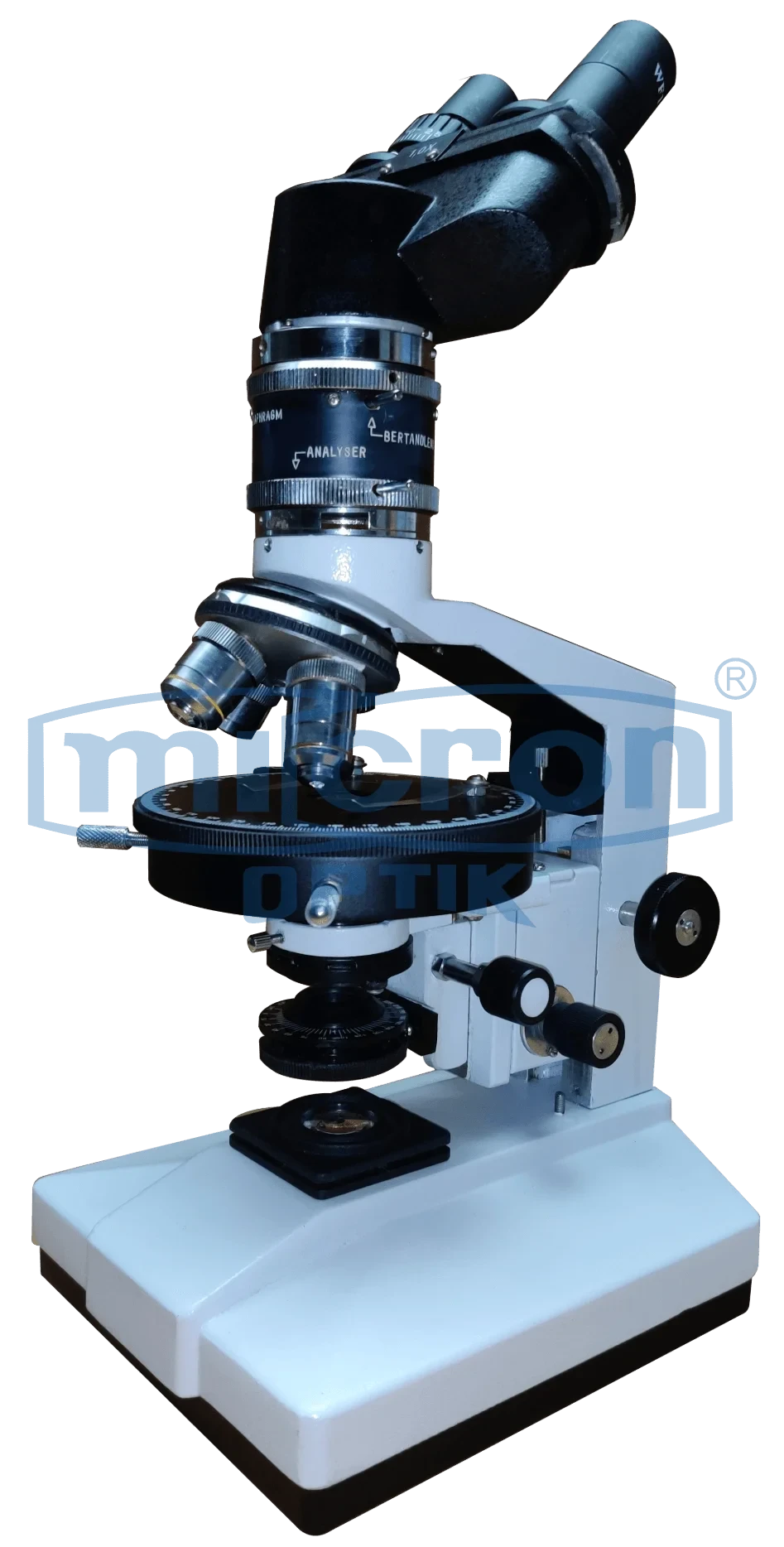
A Polarizing Microscope (Petrographic Microscope) is a specialized instrument used extensively in geology, material science, and pharmacology to identify substances based on their optical properties. Micron's polarizing microscopes utilize cross-polarized light to detect birefringence in anisotropic materials. These are widely considered the best tools for identifying asbestos fibers and urinary crystals.
The system consists of a polarizer (placed below the stage) and an analyzer (placed above the objectives). When these are crossed (90 degrees), light is blocked, creating a dark background. Birefringent specimens rotate the plane of polarized light, appearing bright against the dark field. Rated as top rated equipment for quality control in pharmaceutical manufacturing, they verify the crystalline structure of drugs. The rotating stage allows the user to rotate the specimen to find the angle of extinction.
Micron polarizing microscopes feature strain-free objectives specifically designed not to introduce their own birefringence, ensuring that only the specimen's properties are measured. The centrable substage condenser is critical for aligning the optical axis. For accurate conoscopic observations, this alignment precision is the best in class. The built-in Bertrand lens facilitates the transition from orthoscopic (viewing the image) to conoscopic (viewing the interference figure) mode.
These microscopes are essential for identifying minerals in thin sections, detecting contaminants in food, and analyzing polymer structures. The quartz wedge compensator allows geologists to determine the fast and slow rays in crystals, helping to identify feldspar and quartz varieties. That is why Micron is a top rated provider for geology departments and mining labs. The robust, vibration-free stand is essential for the high magnifications needed to view fine crystalline details.
Investing in a Micron Polarizing Microscope unlocks the hidden optical world of crystalline materials. It is the best choice for any laboratory involved in material identification, failure analysis, or geological exploration. By revealing the internal structural order of matter, it provides critical data that other microscope types cannot offer.

 SURGICAL MICROSCOPES